The Minutes of the Evening
Every gathering worth the name has someone writing down what was said. Take that job for yourself, keep it short, and read it again a week later.
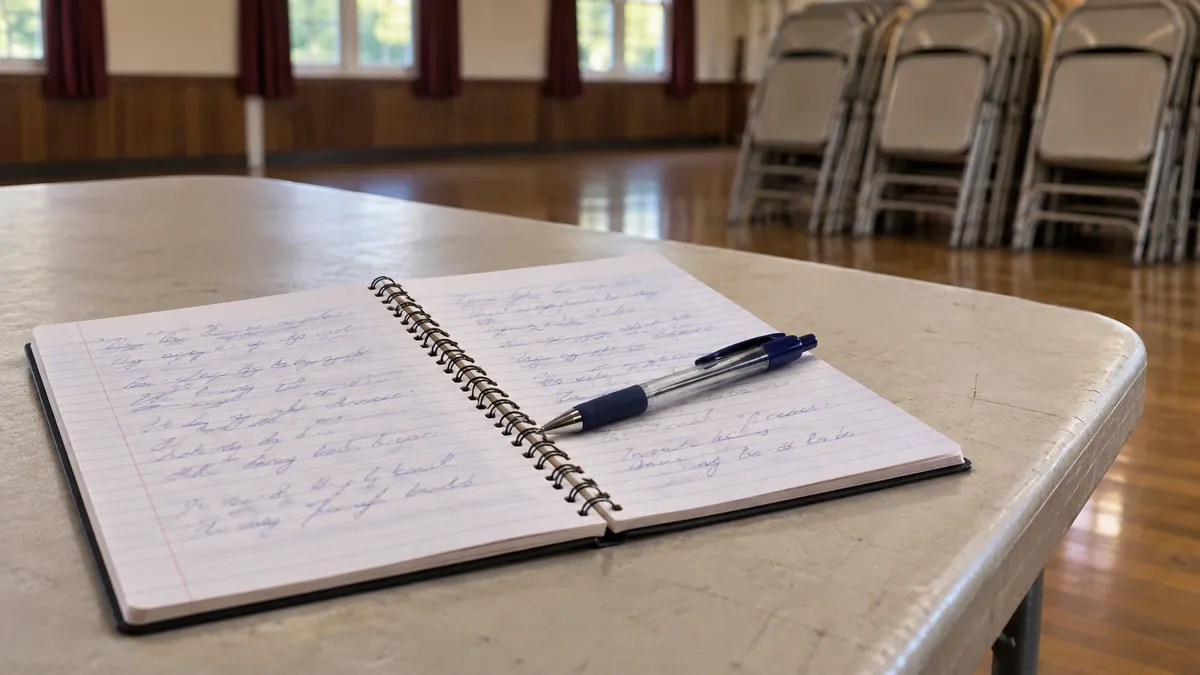
The secretary's chair
In any club, board or committee there is one seat with more paper in front of it than the others. The person in that seat has the least glamorous job in the room: catch what was proposed, who agreed, what was left for next time, and write it in plain language so that a month later nobody has to argue about it. Those pages are called the minutes. They are dull to read and invaluable to have.
The reason minutes work has nothing to do with bylaws. Memory does not keep a recording. It keeps a rough summary, and the summary drifts. Two people who sat through the same hour will remember it differently by Friday, and both will be sure they have it right. The written page settles it. That same drift happens inside a single head, and the same fix applies.
Why writing it down helps the head as well as the record
When you put something into your own words, you are doing more than storing it. You have to decide what mattered, choose words for it and set them in order. That small act of sorting is attention in its most concentrated form. People who study learning have long noticed that material a person has summarized for themselves tends to stay with them better than material they only heard, and that bringing it back up later, rather than just rereading it, strengthens it further. You do not need a laboratory to feel the difference. Write down the name of the new person at the table and you will find it easier to say hello to her next week than if you had only nodded.
A notebook also takes pressure off. Many people past fifty notice that they spend energy holding on to things they are afraid of losing: the date of the next meeting, the phone number someone mentioned, the thing they promised to bring. Once it is on paper, the mind can let go of guarding it and spend that attention on the conversation in front of it. That relief alone makes the habit worth trying.
The three lines
Real minutes run long. Yours should not. After any gathering, whether a committee night, a lunch with a friend or a long phone call with your sister, open a small notebook and write three lines, no more.
Line one: who was there. First names are fine, with a peg for anyone new. "Walt, Marisol, Dolores (red glasses, library board), Ken."
Line two: the one thing worth keeping. A decision, a piece of news, a question someone asked that you want to think about. "Ken's daughter moved to Denver. Marisol asked about rides to the clinic."
Line three: what you owe. Anything you promised, with a day attached. "Bring the folding table Saturday. Call Ken about Denver by Wednesday."
Date the top of the entry. That is the whole method. It takes three or four minutes, it fits on the inside of a pocket notebook page, and it will be easier to do in the car before you drive home than at the kitchen table, where the evening has already started to blur.
Reading the minutes back
Here is the part that most people skip, and it is the part that does the most. Every gathering on a fixed schedule gives you a natural date to reread. The night before the next meeting, or in the parking lot before you go in, open the notebook to last week's page and read the three lines.
Before you look, though, try something. Cover the page with your hand and see what you can recall on your own. Who was there? What was the news? What did you promise? Then uncover it and check. That small test is the second pass, and it is the step that turns a note into something you actually carry with you. If you got it all, good. If you missed a name, say it to yourself a couple of times and put a small mark beside it so you notice it next week.
Over a few months, the notebook becomes a record of who you have talked to and what is going on in their lives. It also becomes a quiet measure of your own attention. Some weeks the lines will come easily; some weeks they will not. Both are useful to know.
Keeping the notebook where it will be used
A notebook that lives in a drawer gets used twice. The ones that last are the ones with a fixed home: the glove compartment, the coat pocket, the shelf by the front door next to the keys. Pick a size that fits where it lives. Use the same pen if you can; looking for a pen is the moment the habit dies. And do not worry about handwriting or full sentences. Minutes are for the person who will read them, and that person is you, a week from now.
Some readers prefer a phone. That works too, as long as the three lines and the weekly rereading stay the same. Many people find that the act of writing by hand slows them down just enough to choose their words, and that the paper version is harder to scroll past.
A short plan
Buy one small notebook. Give it a home where your keys already go. After every gathering this week, write the three lines before you drive or walk away. The evening before each one, cover last week's lines, recall what you can, then check. After a month, read the whole notebook from the first page. Most people are surprised by how much has happened and how much of it they now remember.
For the physician, not for the notebook
A notebook helps with ordinary forgetting. If you notice that the lines are getting much harder to write than they were, that whole evenings are missing rather than single names, that you get lost on familiar routes, or that your family is worried, bring the notebook along and show it to a doctor. It is honest evidence, and it can help a professional see what has changed.